
December – February
Winter in Hawaiithe fly fishing guide
Your complete guide to winter fly fishing in Hawaii. Covers top flies, active species, best waters, and expert tips for December through February.
By Cade BagleyUpdated March 27, 2026Fact-checked with state agency data
01The Winter Window
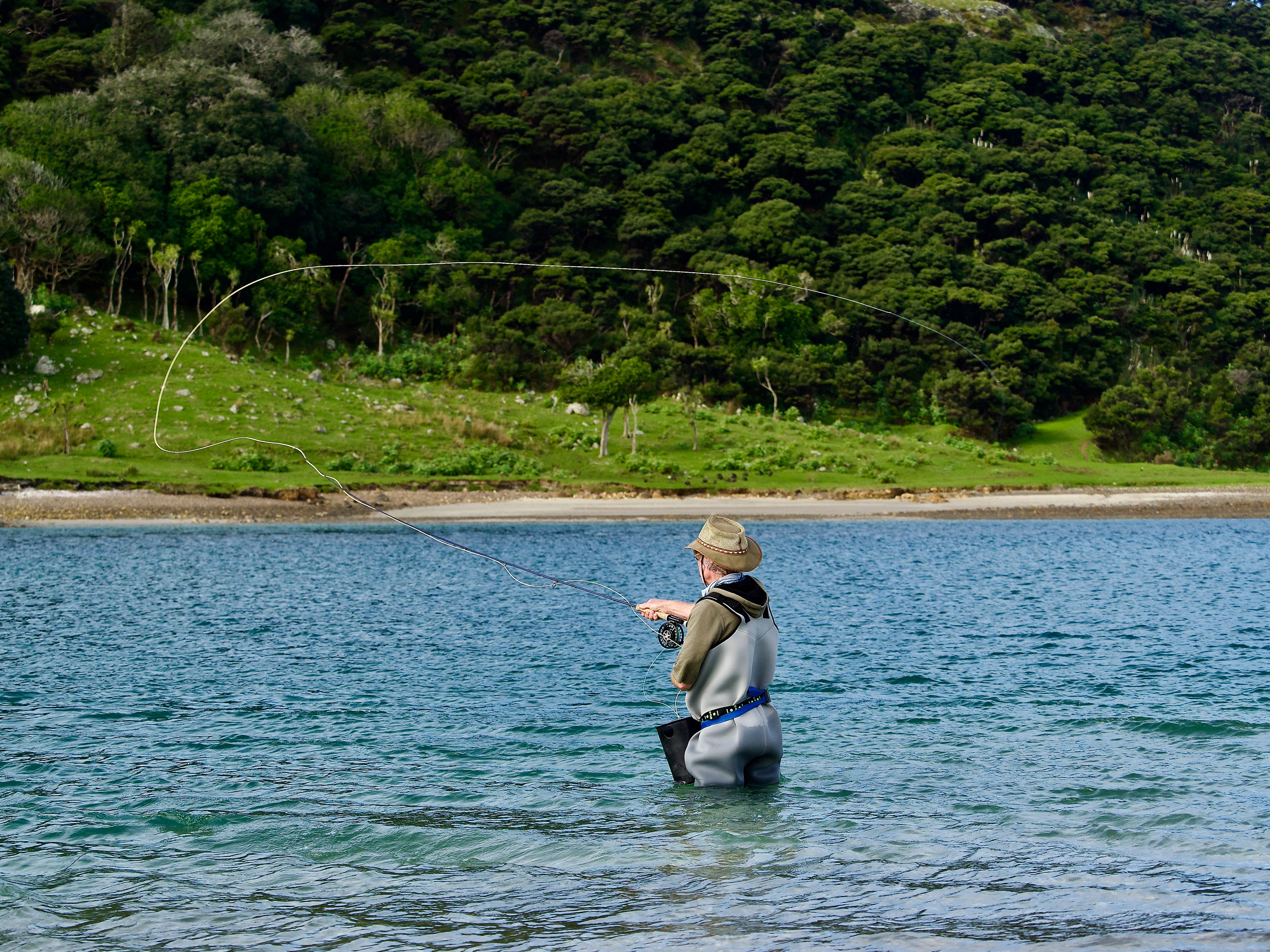
Winter transforms Hawaii's fishing waters into a playground of opportunity. While mainland anglers bundle up against snow and ice, Hawaiian flats reach their seasonal prime with water temperatures holding steady between 72-76°F. Trade winds calm to 10-15 knots, creating gin-clear conditions that make sight fishing a tactical game of precision and stealth. December through February marks the peak season for bonefish feeding activity, with schools moving into shallow water during the warmer midday hours when temperatures climb above 74°F.02Reading the Water: Winter Conditions
Winter's reduced rainfall creates ideal water clarity across Hawaii's prime flats. USGS gauge data shows stream flows dropping to seasonal lows, pushing brackish-tolerant species into predictable staging areas near river mouths.Key Conditions
- Water temperatures: 72-76°F in shallow flats, 68-72°F in deeper channels
- Visibility: 15-25 feet on most flats during calm periods
- Trade winds: 10-15 knots average, with frequent light-wind days
- Tidal influence: Most productive on incoming tides when bonefish push onto flats
- Best conditions: Rising tide 2 hours before high through 1 hour after
03The Fly Box: Essential Winter Patterns
Winter bonefish feeding patterns demand specific fly presentations that match the season's abundant prey species. Water clarity requires more natural patterns and precise presentations compared to murkier summer conditions.Bonefish Patterns
- Gotcha (Size 6-8): Pink and tan combination excels in clear water
- Crazy Charlie (Size 6-10): Tan and white versions for spooky fish
- Bonefish Slider (Size 4-6): Weighted eyes for deeper channels
- Spawning Shrimp (Size 8-10): Orange and tan matches winter crustacean activity
Milkfish and Trevally Patterns
- Clouser Minnow (Size 2-6): White and chartreuse for milkfish
- Deceiver (Size 1/0-3/0): Blue and white for giant trevally
- Popper (Size 2-1/0): Surface action during feeding frenzies
"Winter bonefish see every fly that hits the water. Leaders need to be 12-15 feet long with 10-12 pound tippet, and presentations must land 4-6 feet ahead of moving fish to avoid spooking them in clear conditions."
04Prime Waters
Kailua-Kona Coast
Kailua-Kona Coast offers consistent winter action with protected bays and shallow flats. Access via Honokohau Harbor provides easy entry to prime bonefish habitat. Target the sandy flats south of the harbor during incoming tides.- Best times: 2 hours before high tide to 1 hour after
- Target depth: 2-4 feet over sand and coral patches
- Parking: Honokohau Harbor public lot ($5 daily fee)
- Species: Bonefish, barracuda
Hanalei River & Bay
Hanalei River & Bay combines river mouth productivity with expansive bay flats. Winter's low water concentrates fish in the deeper channels while warm afternoons push them onto adjacent flats.- Access: Hanalei Bay public beach parking
- Wade carefully: Strong currents near river mouth
- Peak seasons: December through February
- Target species: Bonefish, giant trevally, milkfish
Kaneohe Bay Flats
Kaneohe Bay Flats provides accessible wade fishing with consistent bonefish populations. The protected bay offers calm conditions even when trades blow elsewhere on Oahu.- Launch points: He'eia State Park, Coconut Island access
- Wading conditions: Firm sand bottom, watch for coral heads
- Best patterns: Crazy Charlie in tan, Gotcha in pink
- Optimal conditions: Light winds, rising tide
Lake Wilson (Wahiawa Reservoir)
For anglers seeking freshwater variety, Lake Wilson provides year-round warmwater fishing. Winter temperatures in the mid-70s keep largemouth bass active throughout the day.- Access: Public launch on north shore
- Techniques: Streamer fishing along structure
- Best patterns: Woolly Bugger, Deceiver
- Target zones: Submerged trees, rocky points
05Species in Focus
Bonefish
Winter brings peak bonefish activity across Hawaiian flats. Schools of 5-15 fish cruise predictable routes, feeding heavily on small crabs and shrimp during the warmer midday hours.- Size range: 2-6 pounds average, occasional fish to 8+ pounds
- Best feeding times: 10 AM to 3 PM when water warms
- Preferred habitat: 2-4 feet of water over sand and coral rubble
- Key behavior: Schools move with tidal flow, individual fish on shallow flats
Giant Trevally (Ulua)
Giant trevally patrol deeper channels and reef edges during winter months. These apex predators require heavy tackle and precise presentations near structure.- Size potential: 20-100+ pounds
- Prime locations: Channel mouths, reef drop-offs
- Best techniques: Large streamers, surface poppers during feeding activity
- Fighting characteristics: Initial runs of 100+ yards common
Milkfish
Milkfish schools concentrate in protected bays during winter months, offering consistent action on light tackle. These vegetarian targets require precise presentations with small flies.- Average size: 3-8 pounds
- Feeding behavior: Surface sipping, subsurface cruising
- Best flies: Small Clouser Minnows, unweighted streamers
- Prime times: Early morning, late afternoon feeding periods
06Techniques That Produce
Sight Fishing Fundamentals
Winter's clear water demands refined sight fishing techniques. Successful anglers position themselves to intercept cruising fish rather than cast blindly to likely spots.- Approach angles: Stay 40-60 feet from target fish
- Lead distance: 4-6 feet ahead of moving bonefish
- Strip patterns: Short, erratic strips mimic fleeing prey
- Rod position: Keep rod tip low to avoid line shadow
Tidal Strategy
Understanding tidal movement drives success on Hawaiian flats. Fish movement follows predictable patterns based on tide stage and water temperature.- Incoming tide: Fish push onto flats, best for shallow water fishing
- High tide: Target deeper channels and coral heads
- Outgoing tide: Fish concentrate in channels and pockets
- Low tide: Focus on deeper water near reef edges
Wind Reading
Trade wind patterns create feeding opportunities and fishing challenges that change throughout winter months.- Light winds (0-5 knots): Target shallow flats with spooky fish
- Moderate trades (10-15 knots): Focus on protected lee shores
- Strong trades (20+ knots): Fish deeper water, channels, and river mouths
- Wind direction: Northeast trades create fishable conditions on south and west shores
07Local Intel
Timing Windows
Experienced guides target specific time frames that consistently produce fish during winter months. These windows align with temperature, light, and tidal factors.- Prime time: 10 AM to 3 PM when water temperatures peak
- Early morning: Focus on deeper channels until flats warm
- Late afternoon: Return to channels as temperatures drop
- Overcast days: Fish remain active longer in stable temperatures
Pressure Points
Winter brings increased angling pressure to accessible flats, particularly on weekends and holidays. Strategic timing and location selection avoid crowds while maintaining productivity.- Weekday advantage: Tuesday through Thursday see minimal pressure
- Early entry: First light provides solitude and undisturbed fish
- Weather windows: Light rain or overcast skies deter casual anglers
- Remote access: Longer walks yield less pressured water
Seasonal Patterns
Local knowledge reveals subtle seasonal shifts that affect fish behavior and feeding patterns throughout the winter period.- December: Peak bonefish activity, schools most predictable
- January: Trevally activity increases, larger individuals common
- February: Spawning behavior affects some species' feeding patterns
- Moon phases: New moon periods produce best trevally fishing
08Gear Checklist
Rod and Reel Setup
- 8-weight rod: 9-foot length for bonefish and smaller trevally
- 10-weight rod: 9-foot length for large trevally and powerful species
- Saltwater reels: Sealed drag system, minimum 200 yards backing
- Line selection: Weight-forward floating lines, tropical climate rated
Leaders and Tippet
- Bonefish leaders: 12-15 feet, tapered to 10-12 pound tippet
- Trevally leaders: 9-12 feet, 20-40 pound shock tippet
- Fluorocarbon: Essential in clear water conditions
- Wire leaders: 20-30 pound for barracuda encounters
Wading and Protection
- Flats boots: Hard sole with good traction on coral
- Sun protection: Long-sleeve shirts, wide-brim hats, sunglasses
- Sunscreen: Reef-safe formulations, SPF 30+ minimum
- Stripping baskets: Essential for managing line in wind
Accessories
- Polarized glasses: Copper or amber lenses for sight fishing
- Pliers: Saltwater-resistant for hook removal
- Hemostats: Fine-point for small hook extraction
- Waterproof fly boxes: Multiple boxes for different species
09Regulations & Conservation
Hawaii's fishing regulations balance conservation with angling opportunity. Winter months bring specific considerations for protected species and sensitive habitats. Current regulations require a Hawaii fishing license for all anglers 16 and older.License Requirements
- Freshwater license: Required for Lake Wilson and other inland waters
- Saltwater license: Required for all marine species
- Tourist licenses: 7-day and 30-day options available
- Online purchase: Available through Hawaii Division of Aquatic Resources
Species-Specific Rules
- Bonefish: No bag limit, catch and release encouraged
- Giant trevally: 18-inch minimum, 2 fish daily bag limit
- Milkfish: No restrictions, catch and release preferred
- Largemouth bass: No bag limit in Lake Wilson
Protected Areas
- Marine Life Conservation Districts: No fishing allowed
- Fish Replenishment Areas: Seasonal closures may apply
- Cultural sites: Respect traditional fishing areas
- Private property: Obtain permission for shoreline access
"Hawaii's marine resources face increasing pressure from development and climate change. Practice catch and release, especially for native species like bonefish and trevally, to ensure these fisheries remain viable for future generations."
10Sources & References
- USGS Hawaii Water Data - Real-time stream flow and water quality data
- Hawaii Division of Aquatic Resources - Fishing regulations and license information
- Trout Unlimited - Conservation initiatives and habitat protection programs
- National Weather Service Honolulu - Marine forecasts and trade wind patterns
- NOAA Tides and Currents - Hawaii tide predictions and water levels
- Hawaii DLNR Division of Aquatic Resources - Species information and conservation status
- Papahānaumokuākea Marine National Monument - Marine conservation and research
- Hawaii Marine Education Center - Marine species identification and ecology
Waters in Hawaii 6 to fish
Fly shops nearby
Local flies, current advice and guided trips.
Read before you go
Monthly reportJulin Pennsylvania
July · Pennsylvania
Pennsylvania July Fly Fishing: Summer Hatches & Prime Streams
Pennsylvania's July fly fishing peaks with terrestrials, sulphurs, and tricos. Top streams include Penns Creek, Yellow Breeches, and Delaware. Expert guide.
Monthly reportDecin Washington
December · Washington
Washington December Fly Fishing: Winter Steelhead & Trout Guide
December fly fishing in Washington delivers prime winter steelhead and surprising trout action. Discover top rivers, proven flies, and winter tactics.
Gear & tipsNew Zealand South Island Fly FishingTrout Paradise Guide
Gear & tips
New Zealand South Island Fly Fishing: Trout Paradise Guide
Discover New Zealand's South Island trout fishing paradise with expert tips on legendary waters, trophy fish, and essential techniques for success.
Monthly reportSepin California
September · California
September Fly Fishing in California: Prime Rivers & Hatch Guide
September brings ideal fly fishing conditions to California's rivers. Get insider tips on top waters, emerging hatches, and essential flies for peak season.
Species guideMountain Whitefish Fishing inin Wyoming
Species guide · Wyoming
Mountain Whitefish Fishing in Wyoming
Need gear or a guide?
Find fly shops near Hawaii's best winter waters for local flies, advice and guided trips.
Ask an AI about this page