
Winter in Montanathe fly fishing guide
01The Winter Window
Montana's winter fishing scene operates on a different frequency than the summer circus. Water temperatures hover between 32°F and 40°F from December through February, creating a narrow but productive window for dedicated anglers. The USGS gauge data shows tailwater systems maintaining the most stable flows, while freestone rivers drop to their annual lows. Ice-free sections below dams offer the most consistent action, with brown trout and rainbow trout feeding aggressively during brief warming periods. The key advantage: virtually no angling pressure and trout that haven't seen flies since October.
02Reading the Water: Winter Conditions
Winter transforms Montana's rivers into different fisheries entirely. Flows typically drop 40-60% below summer levels, concentrating fish in deeper pools and runs. The Missouri River maintains 4,000-6,000 CFS through Holter Dam, while the Bighorn River runs 1,800-2,200 CFS below Yellowtail Dam.
Temperature Patterns
Tailwaters: 36-42°F, most stable fishing conditions
Spring creeks: 34-38°F, can ice over during extreme cold snaps
Freestone rivers: 32-35°F, limited ice-free water
Optimal fishing windows: 11 AM to 3 PM when air temps peak
Hatches and Insect Activity
Winter insect activity remains surprisingly robust on tailwaters and spring creeks:
Midges: Size #18-24, emerge 11 AM-2 PM on calm days
BWOs: Size #20-22, sporadic but fishable on the Missouri and Beaverhead
Scuds: Active year-round in spring creek environments
Sowbugs: Peak activity in 38-40°F water
The Trout Unlimited winter survey data shows midge emergence as the primary surface activity, accounting for 70% of rising fish observed December through February.
03The Fly Box: Essential Winter Patterns
Winter fly selection focuses on small, dark patterns that imitate active food sources. Water clarity increases significantly with low flows, demanding precise presentations and realistic flies.
Nymph Patterns
Zebra Midge: Size #18-24, black/red, silver/red combinations
Pheasant Tail Nymph: Size #18-20, weighted versions for deeper pools
Scud: Size #16-18, olive and tan, essential for spring creeks
Sowbug: Size #16-20, gray patterns for consistent producers
Copper John: Size #18-20, red and green variants
Dry Fly Options
Griffith's Gnat: Size #20-24, black hackle over peacock herl
Parachute Adams: Size #20-22, for sporadic BWO activity
Midge Adult: Size #22-26, black and gray patterns
Rigging Essentials
6X-7X tippet for clear water presentations
Split shot placed 18 inches above point fly
Double nymph rigs with different sink rates
Strike indicators positioned for 1.5x water depth
04Prime Waters
Missouri River
The Missouri River below Holter Dam offers Montana's most reliable winter fishing. Water temperatures stay consistent at 38-42°F, and flows remain fishable even during severe cold snaps.
Craig to Cascade: 30 miles of wade fishing, focus on deeper runs
Key access points: Craig, Wolf Creek Bridge, Ulm
Best techniques: Double nymph rigs with zebra midges and scuds
Peak times: 11 AM-2 PM during midge emergences
Bighorn River
Bighorn River flows remain stable through winter, though access becomes challenging below the dam. The river maintains 40-42°F temperatures year-round.
Afterbay Dam to 13-Mile: Most productive winter water
Target species: Large rainbow trout and brown trout
Weather considerations: Road closures possible during blizzards
Spring Creek Systems
DePuy Spring Creek and similar private waters offer technical fishing for selective trout. Water temperatures range 34-38°F with occasional ice formation during extreme cold.
Insect activity: Year-round scud and sowbug populations
Presentation: Long leaders, 7X tippet, dead-drift nymphs
Access: Fee-based fishing on most productive waters
Peak conditions: Calm, overcast days with minimal wind
05Species in Focus
Brown Trout
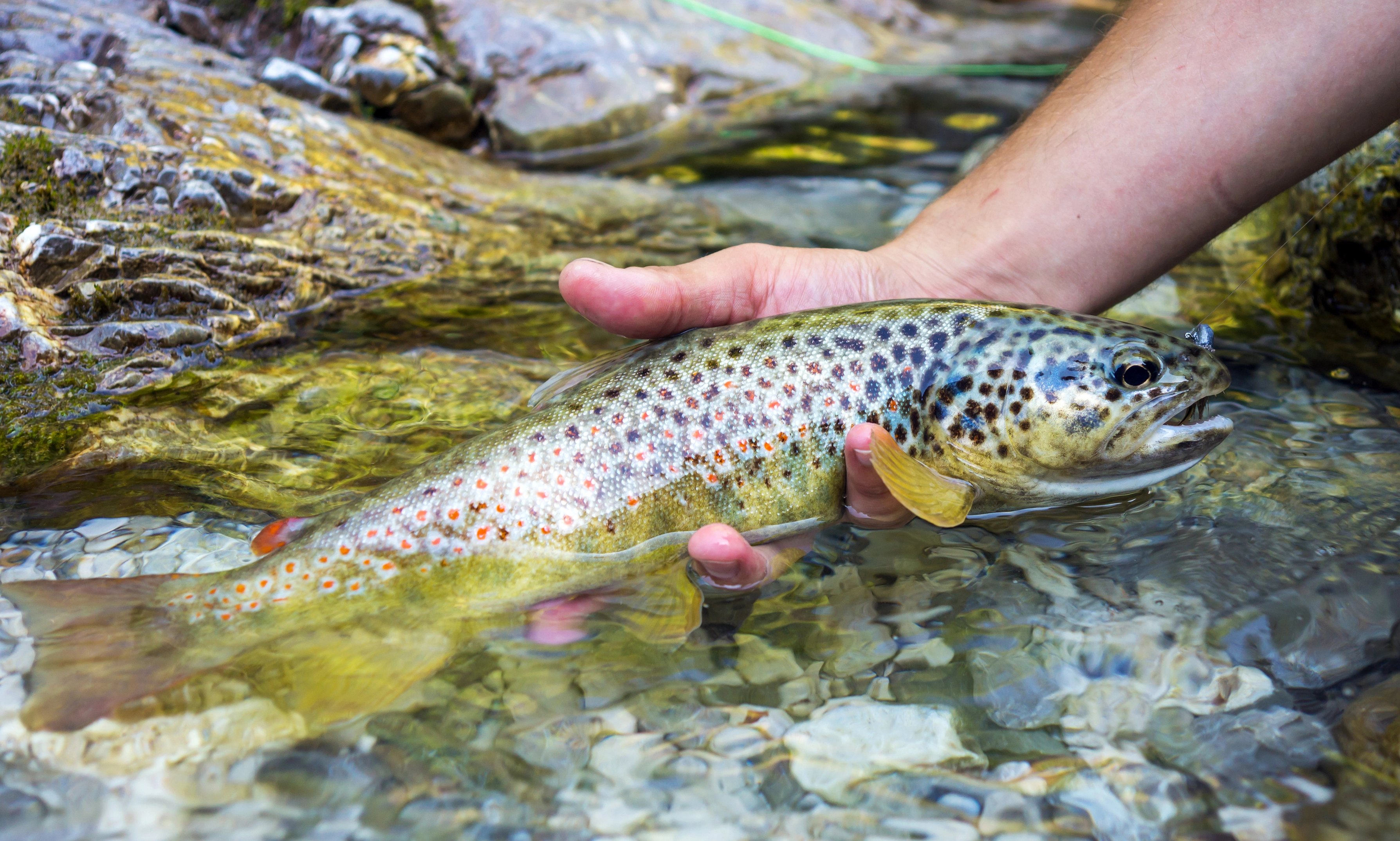
Brown trout remain the most active winter feeders, particularly large fish moving into shallow water during brief warming periods. Post-spawn fish from October regain condition quickly in nutrient-rich tailwaters.
Feeding behavior: Most active 11 AM-3 PM during temperature peaks
Preferred lies: Deep runs, undercut banks, slack water behind boulders
Size ranges: 14-20 inches common, 20+ inch fish frequent in tailwaters
Diet focus: Midges, scuds, sowbugs, occasional small minnows
Rainbow Trout
Rainbow trout feed consistently through winter but require precise presentations in clear, cold water. Tailwater populations show the most activity during stable weather patterns.
Temperature preferences: Most active in 38-42°F water
Seasonal patterns: Hold in deeper pools, move to feeding lies during hatches
Average sizes: 12-18 inches, with excellent body condition
Key foods: Aquatic worms, midges, small crustaceans
Mountain Whitefish
Mountain whitefish provide consistent action when trout fishing slows. These native species remain active at temperatures that shut down trout feeding.
Prime locations: Madison River, Yellowstone River
Techniques: Bottom-bouncing small nymphs, size #18-22
Feeding behavior: Most active during midday temperature peaks
Conservation note: Native species, handle carefully for quick release
06Techniques That Produce
Nymphing Strategies
Winter nymphing requires adjustments for slower fish metabolism and crystal-clear water conditions. Presentations must be precise, and drag-free drifts become critical.
Euro-nymphing: Tight-line techniques excel in clear, low water
Depth control: Get flies to the bottom quickly with adequate weight
Drift length: Extend drifts 2-3x longer than summer fishing
Strike detection: Watch for subtle pauses or sideways movement
"Winter trout sip flies rather than smash them. The take often feels like a soft tick rather than the aggressive hits of summer." — Montana guide wisdom
Dry Fly Tactics
Surface activity remains limited but productive during optimal conditions. Midge hatches on tailwaters provide the best dry fly opportunities.
Timing windows: 11 AM-2 PM during midge emergences
Approach: Long casts, fine tippets, minimal disturbance
Pattern selection: Size #20-24 Griffith's Gnats and midge adults
Weather requirements: Calm conditions, minimal surface chop
Streamer Fishing
Large brown trout respond to streamers during winter, particularly on overcast days with stable flows. Target deeper pools and undercut banks.
Effective patterns: Woolly Buggers, size #8-12, olive and black
Presentation: Slow retrieves with long pauses
Water types: Deep pools, slack water, structure
Equipment: Sinking tip lines for deeper presentations
07Local Intel
Weather Windows
Montana's winter weather creates distinct fishing opportunities that local guides recognize:
Chinook winds: Rapid temperature increases trigger feeding activity
High pressure systems: Stable conditions improve hatch activity
Overcast days: Often better than bright, sunny conditions
Temperature swings: Fish become active during warming trends
Access Considerations
Winter access requires planning and local knowledge:
Road conditions: Check Montana Department of Transportation reports
Parking areas: Many summer access points become impassable
Ice formation: Guides watch closely, can change daily
Daylight hours: Plan for 8.5-9 hours of fishable light
Guide Secrets
Midge timing: Peak emergence occurs 1-2 hours after air temperature peaks
Fish location: Large fish often hold in surprisingly shallow water
Equipment tips: Carry spare guides - they freeze regularly
Thermometer use: Water temperature changes of 2°F dramatically affect feeding
08Gear Checklist
Essential Equipment
Rod: 4-5 weight, 9-foot length for versatility
Reel: Large arbor with smooth drag system
Lines: Weight-forward floating, sink-tip for streamers
Leaders: 9-12 foot, tapered to 6X-7X
Tippet: 5X-7X fluorocarbon for clear water
Cold Weather Clothing
Waders: Insulated neoprene or breathable with warm layers
Boots: Felt or rubber soles with studs for icy rocks
Gloves: Fingerless wool or neoprene for dexterity
Layers: Merino wool base, insulating mid-layer, waterproof shell
Hat: Wool or fleece with sun protection
Winter-Specific Accessories
Hand warmers: Chemical packs for warming guides and hands
Thermometer: Digital for monitoring water temperature
Ice scraper: For clearing guides and reel seats
Extra guides: Tip guides break frequently in cold weather
Thermos: Hot drinks maintain core body temperature
09Regulations & Conservation
Montana's winter fishing regulations remain consistent with general season rules, though some waters have special restrictions. The Montana Fish, Wildlife & Parks website provides current regulation updates.
License Requirements
Conservation license: Required for all anglers
Fishing license: Annual or daily options available
Aquatic invasive species sticker: Required for all watercraft
Nonresident surcharge: Additional fee for out-of-state anglers
Special Regulations
Madison River: Catch-and-release from Quake Lake to Ennis
Big Hole River: Seasonal closures protect spawning fish
Spring creeks: Most require additional permits or fees
Tailwater dams: No fishing within 150 feet of dam structures
Conservation Practices
Barbless hooks: Reduce handling time and injury
Quick releases: Minimize time out of water in cold conditions
Native species: Handle mountain whitefish and cutthroat with extra care
Water temperature: Avoid fishing when water exceeds 65°F (rare in winter)
10Sources & References
Montana Fish, Wildlife & Parks - Official regulations, licensing, and conservation information
USGS Water Resources Montana - Real-time streamflow and water temperature data
Trout Unlimited - Conservation updates and habitat information for Montana waters
National Weather Service Missoula - Weather forecasts and river ice conditions
Montana Fly Fishing Guides Association - Local guide services and current fishing reports
U.S. Forest Service Northern Region - Access information for public lands and waters
Montana Department of Transportation - Road conditions and travel advisories
Stream Temperature Monitoring Network - Detailed temperature data for Montana rivers
Top Winter flies for Montana
Ranked by how often they show up in this season's reports.
Waters in Montana 22 to fish
- Beaverhead Riverriver
- Big Hole Riverriver
- Big Spring Creekspring creek
- Bighorn Riverriver
- Bitterroot Riverriver
- Blackfoot Riverriver
- Clark Fork Riverriver
- Dearborn Riverriver
- DePuy Spring Creekspring creek
- Flathead Riverriver
- Gallatin Riverriver
- Hebgen Lakelake
- Madison Riverriver
- Missouri Riverriver
- Poindexter Sloughspring creek
- Rock Creekcreek
- Ruby Riverriver
- Shields Riverriver
- Stillwater Riverriver
- Sun Riverriver
- Thompson Riverriver
- Yellowstone Riverriver
Fly shops nearby
Local flies, current advice and guided trips.
Read before you go
Pennsylvania July Fly Fishing: Summer Hatches & Prime Streams
Pennsylvania's July fly fishing peaks with terrestrials, sulphurs, and tricos. Top streams include Penns Creek, Yellow Breeches, and Delaware. Expert guide.
Washington December Fly Fishing: Winter Steelhead & Trout Guide
December fly fishing in Washington delivers prime winter steelhead and surprising trout action. Discover top rivers, proven flies, and winter tactics.
Best Fly Fishing Waders of 2025 – Breathable vs. Neoprene
Expert comparison of breathable and neoprene waders with top 2025 models for every budget and fishing condition.
Felt vs. Rubber Sole Wading Boots: What's Legal Where
Essential guide to felt vs. rubber sole wading boots, plus state-by-state regulations to keep you legal on the water.
Fly Fishing Pack vs Vest: Which Setup Is Right for You?
Compare fly fishing packs and vests to find the perfect gear setup for your angling style and fishing conditions.
Best Fly Fishing Sunglasses: Lens Color & Polarization Guide
Master lens color selection and polarization technology for superior vision and fish detection on the water.
Need gear or a guide?
Find fly shops near Montana's best winter waters for local flies, advice and guided trips.