
Spring in Missourithe fly fishing guide
01The Spring Window
Missouri's spring fly fishing season kicks into high gear when water temperatures climb from 45°F in early March to the magical 55-60°F range by mid-April. This thermal transition awakens both trout and bass from their winter lethargy, creating opportunities that range from technical spring creek presentations to aggressive streamer fishing on the state's premier coldwater destinations. The Missouri Department of Conservation reports peak activity windows between 10 AM and 3 PM during March, extending to productive evening sessions by May as mayfly and caddis emergences intensify.02Reading the Water: Spring Conditions
Flow Patterns and USGS Data
Spring flows in Missouri vary dramatically between spring creeks and freestone rivers. Bennett Spring maintains a rock-steady 180-200 cubic feet per second (CFS) throughout the season, while the Current River fluctuates between 800-2,400 CFS depending on rainfall patterns. Monitor USGS gauge data for real-time conditions, particularly on the Current River at Big Spring (USGS 07068000) and the Niangua River below Tunnel Dam (USGS 06926510).Temperature Windows
Missouri's spring temperature progression follows predictable patterns:- March: Spring creeks hold at 56-58°F, tailwaters range from 42-48°F
- April: Most waters reach the 50-55°F sweet spot for trout activity
- May: Temperatures push toward 60-65°F, triggering major hatches and bass pre-spawn
Water Clarity and Visibility
Spring runoff affects Missouri waters differently. The spring-fed systems maintain gin-clear water year-round, offering sight fishing opportunities when conditions allow. Freestone rivers experience brief cloudiness after heavy rains but typically clear within 24-48 hours. Visibility exceeding 3-4 feet creates ideal conditions for dry fly presentations, while slightly off-colored water favors nymph rigs and streamers.Hatch Calendar
Missouri's spring hatches follow Ozark timing patterns:- Blue-winged Olives (Baetis): March-April, size #18-20, peak activity 11 AM-2 PM
- Quill Gordons: Late March-early April, size #12-14, afternoon emergences
- Hendricksons: Mid-April-early May, size #12-14, evening spinner falls
- March Browns: Late April-May, size #10-12, sporadic but significant
- Sulphurs: May-June, size #14-16, evening hatches starting around 6 PM
03The Fly Box: Essential Spring Patterns
Dry Fly Arsenal
Spring dry fly success hinges on matching specific emergence patterns rather than relying on generic attractors. The Blue-winged Olive in size #18-20 remains the most consistent producer across all Missouri trout waters. Guides recommend the Sparkle Dun pattern tied with medium olive dubbing and CDC wings for the Baetis hatches that dominate March and April.- Parachute Adams: Size #12-16, high-floating option for faster water
- Elk Hair Caddis: Size #14-16, olive and tan bodies, essential for evening rises
- Light Cahill: Size #14, cream body for Hendrickson spinner falls
- Griffith's Gnat: Size #18-22, midge clusters during cold snaps
Nymph Selections
Missouri's spring nymph fishing requires precise depth control and drag-free drifts. The Pheasant Tail Nymph in size #16-18 with a copper bead head consistently produces on all spring creek systems. Rig with a strike indicator placed at 1.5x the water depth, adding split shot 18 inches above the fly in deeper runs.- Hare's Ear Nymph: Size #12-16, natural dubbing, gold ribbing
- Prince Nymph: Size #12-14, peacock herl body, white wing posts
- Zebra Midge: Size #18-22, red thread head, essential during cold periods
- Soft Hackle Wet Flies: Size #14-16, partridge and orange, swung through riffles
Streamer Tactics
Spring streamer fishing targets aggressive trout and pre-spawn bass holding in deeper pools and undercut banks. The Woolly Bugger remains the go-to pattern, with olive, black, and brown variations covering most situations. Fish streamers with 6-8 pound tippet using a slow hand-twist retrieve in pools, switching to short strips in faster current.- Clouser Minnow: Size #4-8, olive/white and chartreuse/white for bass
- Muddler Minnow: Size #6-10, sculpin imitation for deeper runs
- Conehead Bugger: Size #6-8, weighted head for getting down quickly
- Crayfish Patterns: Size #4-6, rust and olive colors for smallmouth
04Prime Waters
Bennett Spring State Park
Bennett Spring offers Missouri's premier spring creek experience, with 180 CFS of 58°F water emerging from the largest spring in the system. The upper fly fishing area extends 1.2 miles downstream from the spring outlet, providing wade-friendly water with consistent 2-3 foot depths. Fish the deeper channels along the limestone bluffs using size #16-18 nymphs, switching to dry flies during the reliable 11 AM-2 PM Baetis emergences."Bennett Spring teaches you to fish like a spring creek angler. The clear water and spooky trout demand perfect presentations, but the consistent conditions let you focus on technique rather than reading water." — Local guide wisdomAccess requires a daily trout tag ($7 for residents) in addition to the fishing license. The spring maintains its temperature year-round, making it productive even during temperature swings that shut down other waters.
Roaring River State Park
Roaring River provides the most technical spring creek fishing in Missouri, with crystal-clear water emerging at 140 CFS and 54°F. The restricted fly fishing area covers the first 0.7 miles below the spring, featuring deeper pools and undercut banks that hold larger brown trout and rainbow trout. Focus presentations along the limestone ledges where springs create subtle current breaks and feeding lanes. Spring tactics center on dead-drift nymph presentations using 6X tippet and size #18-20 patterns. The Roaring River brown trout average 12-14 inches but spook easily in the clear water. Position upstream of rising fish and cast to the feeding lane rather than directly to the trout.Montauk State Park (Niangua River)
The Niangua River below Montauk Spring offers diverse water types within a compact 1.5-mile special regulation area. The spring produces 150 CFS at 56°F, creating both shallow riffles and deeper pools that concentrate trout during spring conditions. Work the transition zones where fast water meets deeper pools using weighted nymphs and soft hackle patterns. Spring success depends on matching the specific water type to appropriate presentations:- Spring pool area: Deep nymphing with indicators, size #16-18 patterns
- Riffle sections: Soft hackle wet flies swung downstream
- Deeper runs: Streamer presentations along undercut banks
Current River
The Current River transitions from trout water in the upper reaches to exceptional smallmouth bass habitat downstream from Big Spring. Spring flows between 800-2,400 CFS create ideal wade fishing conditions, with water temperatures climbing from 45°F in March to 60°F by late May. Target the spring-fed tributaries where cold water confluence zones concentrate both trout and smallmouth. Smallmouth bass staging areas include the deeper pools below Welch Spring and the boulder fields downstream from Big Spring. Fish Clouser Minnows and crayfish patterns along rocky banks during the 50-55°F temperature window when bass move shallow to feed aggressively before spawning.Jacks Fork River
Jacks Fork River provides Missouri's best spring smallmouth bass fishing, with numerous spring inputs maintaining optimal temperatures throughout the season. The river features classic Ozark characteristics: gravel bars, deep pools, and undercut banks that create prime bass habitat. Target the confluence areas below major springs where temperature differences create feeding zones. Spring tactics focus on aggressive presentations during the pre-spawn period:- Morning sessions: Streamers worked along undercut banks
- Midday periods: Nymphs and wet flies in deeper pools
- Evening activity: Surface presentations during warmwater hatches
Table Rock Lake Tailwater
Table Rock Lake tailwater creates Missouri's most productive tailwater trout fishery, with releases from the deep, cold lake maintaining optimal temperatures well into summer. Spring generation patterns typically involve 2-4 hours of flow followed by low-water periods ideal for wade fishing. Check the Corps of Engineers generation schedule before planning trips. The tailwater excels during spring midge hatches when size #18-22 patterns bring trout to the surface in the pools below the dam. Fish the deeper channels during generation periods using heavy nymphs and streamers, switching to dry flies and emergers during low-water windows.05Species in Focus
Rainbow Trout Behavior
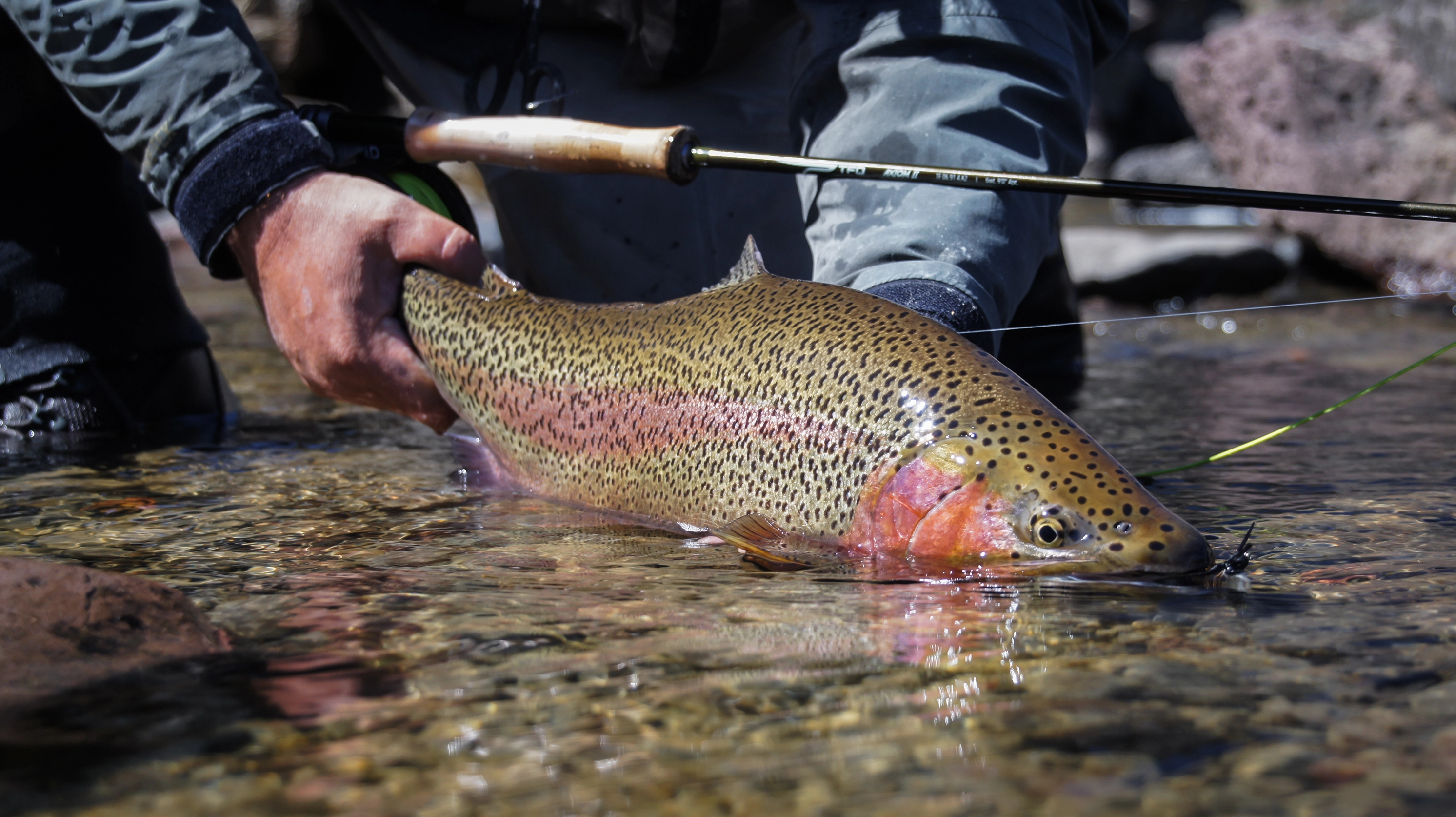
Missouri's stocked rainbow trout exhibit predictable spring feeding patterns tied directly to water temperature and food availability. At 50-55°F, rainbows become increasingly active throughout the day, with peak feeding windows extending from morning through late afternoon. They hold in moderate current areas where they can intercept drifting insects without expending excessive energy. Spring rainbow trout average 10-14 inches in the spring creek systems, with occasional carryover fish reaching 16-18 inches. These larger fish typically hold in deeper pools and along undercut banks, requiring precise presentations with 5X-6X tippet. Target feeding lanes rather than individual fish, as rainbows often feed in predictable patterns within specific current seams.Brown Trout Patterns
Missouri's brown trout population consists primarily of wild fish in the spring creek systems, making them significantly more challenging than their stocked rainbow counterparts. Spring brown trout behavior centers on territorial feeding in prime lies: deep pools, undercut banks, and areas with overhead cover. They feed most actively during low-light periods and overcast conditions.- Approach from downstream: Wade carefully to avoid creating vibrations
- Long leaders: 12-15 foot leaders with 6X tippet for spooky fish
- Natural presentations: Dead-drift nymphs without drag
- Cover water systematically: Fish likely lies thoroughly before moving
Smallmouth Bass Activity
Spring represents peak opportunity for Missouri's renowned smallmouth bass fishery, as fish stage in pre-spawn areas when water temperatures reach 50-58°F. Smallmouth exhibit aggressive feeding behavior during this period, making them susceptible to both nymph and streamer presentations in deeper pools and along rocky structure. Target areas include:- Boulder fields: Crayfish imitations bounced along rocky bottom
- Deep pools: Weighted streamers with sink-tip lines
- Current breaks: Nymphs dead-drifted along structure edges
- Spring confluences: Temperature differential zones
Ozark Bass Considerations
The endemic Ozark bass provides unique angling opportunities in select Missouri streams, particularly the upper Current River system. These fish require specific habitat conditions: clear, spring-fed water with rocky substrate and moderate current. Spring fishing targets them in deeper pools during the 55-60°F temperature range when they feed actively on crayfish and aquatic insects. Ozark bass average 6-10 inches but fight disproportionately hard for their size. Use light tippet (5X-6X) and small flies (size #12-16) to match their feeding preferences and mouth size. Target them during low-light periods when they move from deeper water into feeding areas.06Techniques That Produce
Spring Creek Nymphing
Missouri's spring creek systems demand precise nymphing techniques adapted to clear water and spooky trout. The key lies in achieving drag-free drifts at the correct depth without creating disturbance. Use a high-stick nymphing approach with minimal fly line on the water, maintaining contact with the flies through rod tip movement rather than tight-line tension. Effective spring creek nymphing requires:- Precise depth control: Adjust split shot placement for consistent bottom contact
- Natural drift presentation: Match fly speed to current speed exactly
- Strike detection: Watch for subtle pauses or ticks in the drift
- Quick hook sets: Firm but not aggressive to avoid breaking light tippet
Dry Fly Presentations
Spring dry fly fishing in Missouri requires adapting presentations to specific hatch patterns and feeding behavior. During Baetis emergences, trout often feed in predictable lanes where emerging insects concentrate. Position casts to intersect these feeding lanes rather than targeting individual rising fish, which often move between rises. Critical dry fly elements include:- Upstream presentations: Cast from downstream positions when possible
- Drag-free drifts: Use reach casts and mends to avoid micro-drag
- Precise timing: Match cast timing to feeding rhythms during active hatches
- Strike discipline: Pause before setting the hook to ensure solid contact
Streamer Tactics for Spring
Spring streamer fishing targets aggressive trout and pre-spawn bass using presentations that trigger predatory responses. In the spring creek systems, fish streamers along undercut banks and deeper pools where larger trout hold. Use a slow, methodical retrieve with occasional strips to create wounded minnow action. Effective streamer presentations:- Across and downstream: Cast across current and let the fly swing
- Retrieve variations: Mix slow strips with pauses to trigger strikes
- Depth control: Use weighted flies or sink-tip lines for deeper water
- Structure targeting: Fish tight to cover where predator fish ambush prey
Reading Spring Water Conditions
Missouri's diverse water types require different reading strategies. Spring creeks show subtle variations in current speed and depth that concentrate insects and feeding trout. Look for slight depressions in the streambed, current edges along banks, and areas where different flows converge. On freestone rivers like the Current and Jacks Fork, focus on structure-based presentations:- Pool heads: Where fast water enters deeper areas
- Tail-outs: Shallow areas at pool exits where fish feed actively
- Boulder gardens: Complex currents that create feeding opportunities
- Bank structure: Undercuts, fallen trees, and root systems
07Local Intel
Timing Windows
Missouri spring fishing success often hinges on precise timing rather than just location selection. Experienced guides consistently hit the water during specific windows when feeding activity peaks. On spring creek systems, the 11 AM-2 PM window produces the most consistent dry fly action during Baetis emergences, while early morning (6-9 AM) offers the best opportunities for larger, more cautious brown trout. Tailwater systems follow generation schedules that create artificial timing windows. Table Rock releases typically begin around 6 AM, creating prime nymphing conditions for 3-4 hours before shutting down for wade fishing opportunities. Check generation schedules 24 hours in advance through the Corps of Engineers website.Pressure and Solitude
Missouri's managed trout areas receive significant pressure, particularly on weekends and during stocking periods. Target weekday sessions when possible, focusing on the more technical water that casual anglers often bypass. The upper reaches of the fly fishing areas at Bennett Spring and Roaring River see less pressure and hold more selective trout. Alternative timing strategies include:- Late afternoon sessions: When most anglers have departed
- Overcast conditions: When other anglers avoid the water
- Midweek opportunities: Significantly reduced angler pressure
- Post-frontal periods: Stable weather after storm systems pass
Seasonal Transition Periods
Missouri's spring fishing includes critical transition periods when tactics and locations shift dramatically. The late April-early May window marks the transition from early-season patterns to summer strategies, with water temperatures climbing above 60°F and triggering behavioral changes in both trout and bass populations. Key transition indicators include:- Hatch changes: Shift from Baetis to larger mayfly species
- Feeding times: Extension of productive periods into evening
- Bass movement: Migration from deep pools to spawning areas
- Water clarity: Increased algae growth affecting visibility
Weather Pattern Recognition
Missouri's spring weather patterns directly influence fishing success through their effects on insect activity and fish behavior. Stable high-pressure systems create consistent hatches and predictable feeding windows, while approaching storm systems often trigger exceptional feeding activity 12-24 hours before frontal passage. Productive weather patterns include:- Partly cloudy conditions: Optimal light levels for both hatches and angling
- Light winds (5-10 mph): Surface activity without excessive disturbance
- Stable barometric pressure: Consistent insect emergences
- Moderate humidity: Extended hatch periods and surface activity
08Gear Checklist
Rod and Reel Combinations
Missouri spring fishing covers diverse water types requiring specific rod actions and line weights. For spring creek systems, a 9-foot 4-weight rod provides the precision and delicacy needed for spooky trout in clear water. The moderate action allows for accurate presentations with light tippets while providing enough backbone for fighting fish in current. Recommended rod setups:- Spring creeks: 9' 4-weight moderate action with weight-forward floating line
- Tailwaters: 9' 5-weight medium-fast action for versatility
- Smallmouth rivers: 9' 6-weight fast action for streamer work
- Technical nymphing: 10' 3-weight for enhanced line control
Waders and Accessories
Missouri's spring conditions require waders capable of handling both cold water temperatures and varied bottom conditions. Breathable chest waders with felt or rubber soles provide the necessary traction on Missouri's limestone and gravel substrates. Water temperatures in the 45-60°F range necessitate insulating layers beneath waders during early season. Essential wading accessories:- Wading staff: For stability in unfamiliar water
- Net: Rubber bag to protect fish during release
- Hemostats: For safe hook removal
- Zingers: Keep essential tools accessible while wading
Leader and Tippet Systems
Missouri's clear spring creeks and pressured trout demand sophisticated leader setups that balance fish-spooking concerns with practical fishing requirements. Start with 12-15 foot leaders tapering to 5X or 6X for most spring creek situations, adjusting tippet diameter based on fly size and fish behavior. Leader specifications:- Dry flies: 12' leader to 5X, fluorocarbon tippet for spooky fish
- Nymphing: 9' leader to 4X, add 2-3 feet of tippet material
- Streamers: 7.5' leader to 3X for larger flies and aggressive fish
- Technical situations: 6X-7X tippet for highly pressured waters
Fly Storage and Organization
Spring fishing in Missouri requires organized fly storage covering diverse patterns from size #22 midges to size #4 streamers. Waterproof fly boxes with compartments prevent pattern mixing and allow quick access during active hatches. Carry separate boxes for dry flies, nymphs, and streamers to maintain organization during changing conditions. Box organization strategy:- Primary box: Current season patterns in most-used sizes
- Backup selection: Proven patterns in alternate sizes and colors
- Specialty patterns: Local favorites and experimental ties
- Emergency repairs: Super glue, tippet material, and basic tools
09Regulations & Conservation
License Requirements
Missouri fly fishing requires both a valid fishing license and a trout permit for designated trout waters. Resident annual licenses cost $12, with trout permits adding $7. Non-resident annual licenses cost $40, with trout permits at $7. Daily permits provide economical options for short visits: $7 resident daily license plus $7 trout permit, or $11 non-resident daily license plus $7 trout permit. Purchase licenses through the Missouri Department of Conservation website or at approved retailers. Some trout parks require additional daily tags purchased on-site.Trout Park Regulations
Missouri's four trout parks (Bennett Spring, Roaring River, Montauk, and Maramec Spring) operate under special regulations designed to provide quality angling opportunities. These areas feature specific seasons, bag limits, and method restrictions that vary from general fishing regulations. Key trout park regulations:- Seasonal closures: Most parks close from November 1-March 1 annually
- Daily bag limits: Typically 4 trout per day with length restrictions
- Method restrictions: Designated fly fishing areas with artificial lures only
- Special permits: Daily trout tags required in addition to regular licenses
Stream Access Rights
Missouri follows navigable stream law, granting public access to waterways capable of floating a canoe during normal water levels. However, accessing streams requires using public access points or crossing private land with permission. The Missouri Department of Conservation maintains numerous public access points throughout the state's premier fishing waters.Wild Trout Stream Protections
Several Missouri streams receive special protection as wild trout waters with restricted regulations designed to maintain natural reproduction. These areas typically feature more restrictive bag limits, size restrictions, and method limitations. Current wild trout streams include sections of the North Fork of the White River and select spring creek tributaries.Conservation Ethics
Missouri's trout fisheries depend on careful stewardship from anglers who understand the delicate balance between angling opportunity and resource protection. The state's spring creek systems, in particular, require gentle handling practices to maintain water quality and fish populations. Best practices include:- Catch and release: Consider releasing wild trout to maintain breeding populations
- Proper handling: Wet hands before handling fish, minimize air exposure
- Clean waders: Prevent transfer of invasive species between watersheds
- Pack it out: Leave no trace camping and fishing practices
10Sources & References
- Missouri Department of Conservation - Official fishing regulations, licensing, and trout park information
- USGS Water Resources Missouri - Real-time stream flow and gauge data
- Trout Unlimited - Conservation efforts and stream restoration projects in Missouri
- National Weather Service St. Louis - Weather patterns and forecasting for Missouri waters
- Missouri Trout Parks - Official information on Bennett Spring, Roaring River, Montauk, and Maramec Spring
- Ozark National Scenic Riverways - Current River and Jacks Fork fishing information and access
- U.S. Army Corps of Engineers - Table Rock Lake generation schedules and tailwater information
- Missouri Wild Trout Streams - Special regulations and conservation areas
Top Spring flies for Missouri
Ranked by how often they show up in this season's reports.
Waters in Missouri 6 to fish
Fly shops nearby
Local flies, current advice and guided trips.
Read before you go
Pennsylvania July Fly Fishing: Summer Hatches & Prime Streams
Pennsylvania's July fly fishing peaks with terrestrials, sulphurs, and tricos. Top streams include Penns Creek, Yellow Breeches, and Delaware. Expert guide.
Washington December Fly Fishing: Winter Steelhead & Trout Guide
December fly fishing in Washington delivers prime winter steelhead and surprising trout action. Discover top rivers, proven flies, and winter tactics.
Fly Line Types Guide: WF, DT, Running & Shooting Heads
Master fly line selection with our comprehensive guide to weight forward, double taper, running lines, and shooting heads for every fishing situation.
Best Fly Fishing Waders of 2025 – Breathable vs. Neoprene
Expert comparison of breathable and neoprene waders with top 2025 models for every budget and fishing condition.
Felt vs. Rubber Sole Wading Boots: What's Legal Where
Essential guide to felt vs. rubber sole wading boots, plus state-by-state regulations to keep you legal on the water.
Fly Fishing Pack vs Vest: Which Setup Is Right for You?
Compare fly fishing packs and vests to find the perfect gear setup for your angling style and fishing conditions.
Need gear or a guide?
Find fly shops near Missouri's best spring waters for local flies, advice and guided trips.